
That’s a narrower job than most integration-day agendas claim, but it’s one an activity does well. Below are twelve ideas grouped by how long they take, a half-day plan you can lift, and a frank list of what to avoid. Each idea comes with a quick how-to, a rough duration and the group size it suits.
What’s different about team building after a merger
A newly merged team isn’t a new team. It’s two teams with their own habits, in-jokes and loyalties, sharing a name.
- People are anxious, and they know you know. Roles, reporting lines and processes may still be changing. An activity that acts as if nothing has happened will feel tone-deaf. Acknowledge the change in one sentence, then let the activity do its job.
- “Us and them” is the default. Left to choose, people sit with their old team. If you’re planning the day, build mixing into every part of it.
- Leaders are being watched. Whether the senior people from both sides turn up, join in and mix will say more than any welcome speech.
- Some things are better as a conversation. If the real issue is two incompatible ways of working, that needs a facilitated workshop. A game can make that conversation easier. It can’t replace it.
When to run it
Not on the day the restructure’s announced. People need to know their own role first. If they’re still waiting for answers, they won’t relax into a game. Most teams do best once the new structure is clear and people have started working together, while it’s still early enough that the old lines matter. If you can, run a short opener in the first week and a bigger shared activity a few weeks later.
How to mix the two sides
Get this right and most activities will work. Get it wrong and none of them will.
- Every team has people from both sides, as close to half and half as the numbers allow.
- Never set old company against old company. No “legacy A versus legacy B”, however light-hearted it sounds.
- Give the teams neutral names, not the names of either old business, product or office.
- Split the leaders up. One senior person per team at most, from either side.
- Keep teams to four to six. Big enough for a mix, small enough that nobody can sit it out.
Quick openers (10 to 20 minutes)
1. Cross-team pairs
Pair each person with someone from the other side and give them one work question: “what’s one thing your old team did that you’d want to keep?” Each pair shares one answer with the room. It’s useful, it’s about work, and nobody has to reveal anything personal.
Duration: 10 to 15 minutes. Group size: any, in pairs.
2. The “how we did it” swap
Pick one everyday process, like how each side ran its weekly meeting or onboarded a new starter. Mixed tables compare notes and write down one thing that surprised them. It surfaces differences early, in a low-stakes way.
Duration: 15 to 20 minutes. Group size: 8 to 100, tables of 4 to 6.
3. Common ground hunt
Give everyone a card of ten prompts (“has worked here less than a year”, “lives within a mile of the office”, “has the same favourite lunch spot”) and ask them to find someone from the other side for each one. It’s a way to get people moving and talking without anyone having to perform.
Duration: 15 minutes. Group size: 15 to 100.
4. A quiz about both companies
Write ten questions, half about each old business, and put mixed teams on them. Each team needs both sides to score well, which is the point. Keep it to facts people would enjoy knowing, not anything sensitive about the deal.
Duration: 15 to 20 minutes. Group size: 10 to 200, in teams of 4 to 6.
Half-hour to an hour
5. Mixed-team problem solving
Set a chain of puzzles where each answer unlocks the next, like a portable escape room. Mixed teams quickly find out who spots patterns, who reads the detail and who keeps time. It’s absorbing enough that people forget who came from where.
Duration: 45 to 60 minutes. Group size: any, in teams of 4 to 6.
6. The verdict game
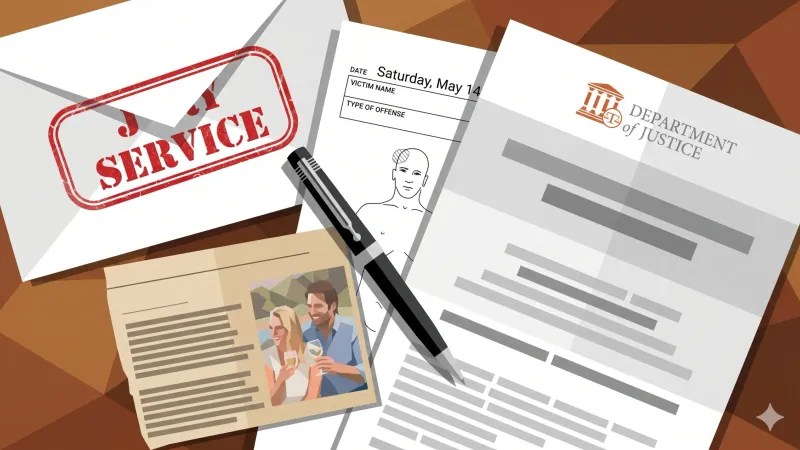
Give mixed teams the same set of evidence for a fictional case and ask them to agree a verdict. They’ve got to listen, weigh up views and reach a decision together, which is a fair rehearsal for the decisions a merged team will be making for real. You can write one yourself or use a ready-made jury game.
Duration: 45 minutes. Group size: any, in teams of 4 to 6.
7. Keep, change, start
A structured conversation, not a game. Mixed tables write down what they want to keep from each old way of working, what should change and one thing to start that neither side did. Collect the cards and tell people what you’ll do with them, or don’t run it at all.
Duration: 45 to 60 minutes. Group size: 10 to 80, tables of 5 to 6.
8. Lunch on assigned tables
Seat everyone so each table has both sides and a mix of levels. Put two easy questions on each table. It’s free and it does a lot of quiet work.
Duration: lunch. Group size: any, tables of 6 to 8.
Half a day
9. A treasure hunt in mixed teams
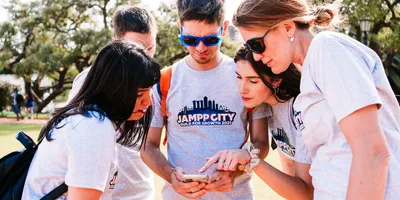
Teams of four to six work through a route of checkpoints, photo tasks and trivia, then come back for the results. Walking side by side takes the pressure off conversation, and the shared story is the one people retell. It’ll work in any town or city, or the grounds of your venue.
Duration: 2 hours. Group size: 8 to 750, in teams of 4 to 6.
10. A business challenge
Mixed teams invent a product, then market and pitch it to the room, who vote on the winner. It suits merged teams because everyone’s skills are useful, from the numbers people to the designers, and it’s about building something new together rather than defending the old.
Duration: 90 minutes. Group size: 8 to 300, in teams of 4 to 6.
11. A murder mystery
Teams study statements and clues to name the culprit. It’s slower and chattier than a quiz, which suits groups where some people are still guarded. You can run it in person, online or hybrid if the two sides don’t share an office.
Duration: 60 to 90 minutes. Group size: any, in teams of 4 to 6.
12. The same event in every office
If the merged team is spread across sites, run one activity at the same time in each location, on one shared leaderboard. Nobody has to travel, and no office feels like it’s the junior partner.
Duration: 60 to 120 minutes. Group size: any, split across locations.
A half-day plan you can use
| Time | What happens |
|---|---|
| 13:00 | Welcome from leaders of both sides, five minutes each, honest about what’s changing |
| 13:15 | Cross-team pairs (idea 1) |
| 13:30 | The main activity in mixed teams (ideas 9 to 11) |
| 15:30 | Break |
| 15:45 | Keep, change, start (idea 7) |
| 16:30 | Results, thank-yous and what happens next |
| 17:00 | Optional drinks |
What to avoid
- Anything that sets one old company against the other.
- Trust exercises, personal disclosure and forced vulnerability.
- Jokes about the deal, the old logos or who “won”.
- Making attendance feel like an assessment.
- Leaders who give the welcome and then leave.
- Promising that the day will fix culture. It won’t, and people will remember you said it.
Run it for you
If you’d rather not write the puzzles, run the scoring and keep 80 people on schedule, our hosted team building activities are built for groups like this. Set the teams so each one has people from both sides, and the host does the rest. They’ll brief everyone, keep the teams moving and run the results. Everyone plays in teams of 4 to 6 in our Mobile Adventures app.
If you’re choosing a hosted activity, start here:
- Invigorate, 30 or 45 minutes in person. Every challenge has to be done with a different group, so people mix all the way through.
- Jury Service: The Vanderwit Murder, 45 minutes, in person, online or hybrid. Teams weigh the evidence and agree a verdict.
- The Pitch, 90 minutes, in person, online or hybrid. Teams create and pitch a product, and the room votes.
- Escape: Arctic Survival, 60 or 90 minutes, in any format. A puzzle-led escape game for quieter groups.
- GPS treasure hunts like The Ultimate, two hours, for 8 to 750 people anywhere.
- Multi-city events, when the two sides sit in different offices.
Custom questions add up to eight of your own to a game, which is an easy way to put facts about both businesses in front of everyone. When Solo Containment ran a treasure hunt for their company team building day, they said: “Across four teams from apprentices to Director the activity was fun, easy to follow and allowed everyone to make a contribution to the points total.” And: “The customised questions were well worth the extra.”
One honest note. The Insiders, our Traitors-inspired game, is a lot of fun, but it’s built on suspicion. Save it for when the merged team trusts each other enough to enjoy that.
What does it cost?
The openers, the keep-change-start session and assigned lunch tables don’t cost a thing. A DIY quiz or puzzle trail costs only the time to write it.
Our hosted activities start at £12 per person + VAT, and GPS treasure hunts are £15 per person + VAT. Most add a host at £250 + VAT for a Remote Host or £750 + VAT for an Onsite Host, one host for every 50 people. Bookings with an Onsite Host have a £1,500 + VAT minimum spend. Some shorter games, including Invigorate and the Jury Service games, include the host and carry a £240 + VAT minimum instead. Custom questions are £200 + VAT. For 40 people on The Pitch with a Remote Host, that’s 40 x £12 = £480, plus £250, so £730 + VAT. Venue, food and travel aren’t included.
Are there free options?
Yes. Cross-team pairs, the process swap, the common ground hunt, keep-change-start and assigned tables don’t cost anything. A DIY quiz about both companies is free too, as long as someone has an afternoon to write it.
Which platforms does it work on?
The in-person ideas work in any office, meeting room or venue. If some of the team are remote, the online and hybrid versions run over Zoom, Microsoft Teams, Google Meet or whatever video platform you already use, with everyone on one leaderboard. For hosted games, each player needs a smartphone or tablet with a working connection.
FAQs
We’ve just merged two teams. What team building activity would help people bond?
One that puts people from both sides into small mixed teams with a shared task. A treasure hunt, a verdict game, a business challenge like The Pitch, or Invigorate, where every challenge is done with a different group, all work well. Avoid anything that sets the old teams against each other.
When should you run team building after a merger?
Once they’re clear about their roles in the new structure, but early enough that the old team lines still matter. A short opener in the first week and a bigger shared activity a few weeks later works well for most teams.
How do you stop “us and them” at a merger team building event?
Mix every team roughly half and half, give teams neutral names, split the senior people up and never run a competition between the old companies. Assigned lunch tables help too.
Can team building fix culture problems after a merger?
No. It can give people a first shared experience and make it easier to talk across the old lines. If the real problem is two incompatible ways of working, you need a facilitated workshop as well.
What if the two merged teams are in different offices?
Run the same activity in each office at the same time on one shared leaderboard, or use a hybrid game over a video call. Nobody has to travel and no site feels left out.
How much does team building for a merged team cost?
The DIY ideas are free. Hosted Wildgoose activities start at £12 per person + VAT, plus £250 + VAT for a Remote Host on most games. Some shorter games include the host with a £240 + VAT minimum.