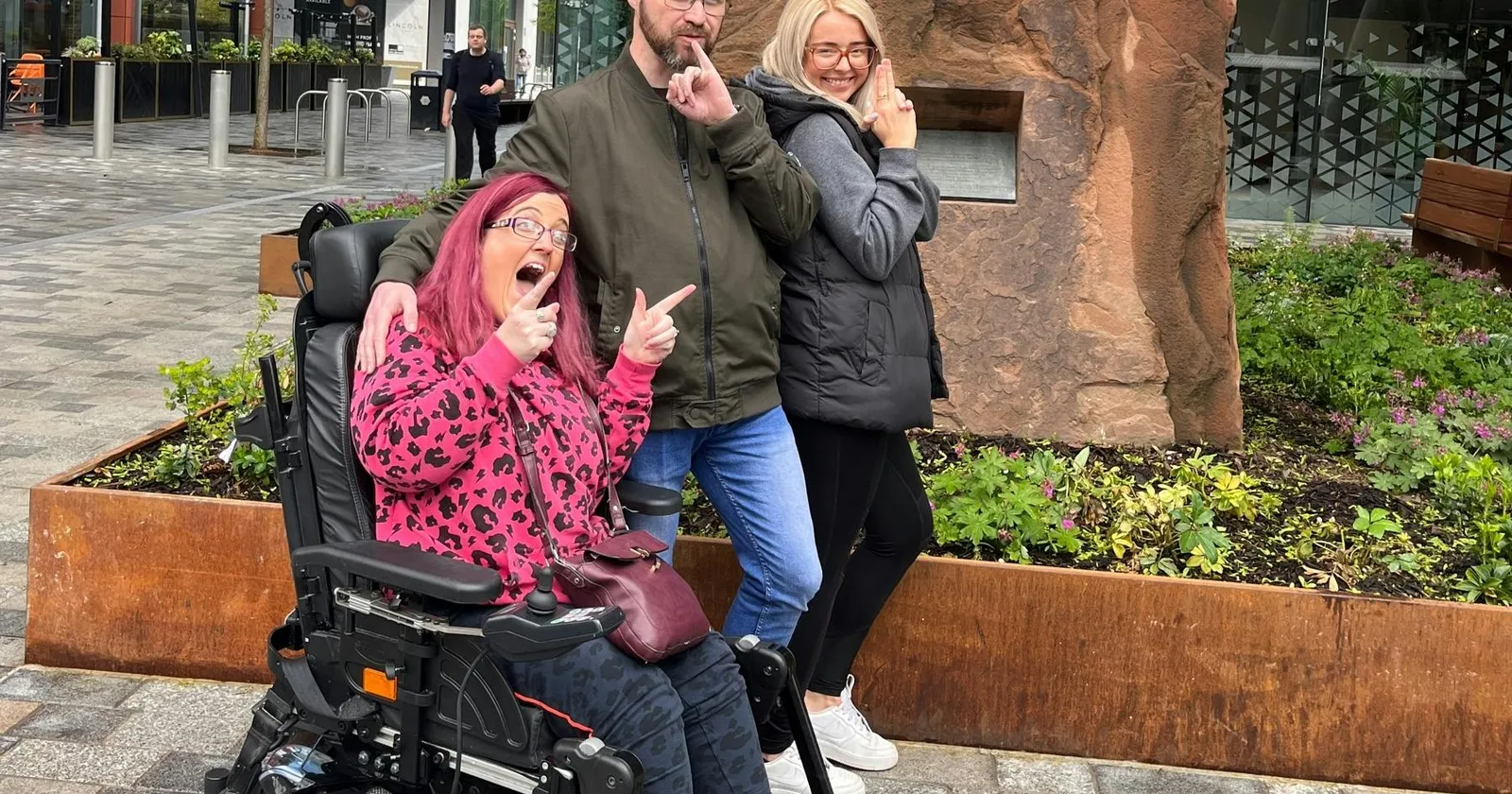



A remote team’s first meetup has a head start most offsites don’t. They’ve already learned to trust each other’s work. What’s missing is everything a video call leaves out: how people move, what makes them laugh, who’s quiet in a room and who’s quiet only on mute. The best first-meetup plans close that gap with shared tasks, not speeches.
Below is an hour-by-hour plan, a dozen activities sorted by how long they take, two real teams who’ve done this, and straight answers on cost. Most of the ideas won’t cost a thing.
Why a first meetup is different
Here’s what trips up organizers.
- The first hour sets the tone. Colleagues who are chatty on Slack can freeze in person. Give them something to do right away.
- People are jet-lagged. If your team spans time zones, someone flew in last night from the West Coast. Keep mornings light and nothing late should be mandatory.
- Work friendships already exist. The people who talk every day will cluster within minutes. If you want new connections, design the mixing in.
- Someone won’t make it. Visas, childcare, illness. Decide early how they’ll take part.
A day plan for your first meetup
If you’re bringing 15 to 60 people together, this plan fits. Shift the times around flights, but keep the order: short welcome, easy opener, one real work session, a long lunch, then the shared activity people will talk about for months.
| Time | What happens | Why |
|---|---|---|
| 10:00 | Breakfast, coffee and name tags | A relaxed window so nobody walks into a silent room |
| 10:30 | A ten-minute welcome and one goal for the day | Say what the day is for, then hand it over |
| 10:40 | A light opener in mixed groups (ideas 1 to 4) | Everyone gets an easy first conversation |
| 11:15 | One working session you can’t do on Zoom | Whiteboarding, planning or a retro |
| 12:30 | Long lunch at assigned tables | 75 minutes, so conversations have time to happen |
| 1:45 | The main team activity (ideas 9 to 12) | The part everyone remembers |
| 4:00 | Results, photos and thank-yous | A clear finish |
| 4:30 | Optional happy hour or dinner | Truly optional, with good non-alcoholic options |
Running a two- or three-day offsite? Schedule the big activity on the first afternoon. It works as an icebreaker for the whole trip, so people walk into day two already knowing their teammates. Oomph did exactly that (details below).
Openers for the first hour (10 to 30 minutes)
1. Name tags with a conversation starter
Print each person’s name, role and one prompt: “ask me about my best remote-work fail”, “ask me about my hometown”. It gives everyone an easy opening line all day.
Duration: all day. Group size: any.
2. Where we work from
Hang a big map and have everyone mark where they work from, then where they grew up in a second color. People start spotting neighbors and shared hometowns almost immediately.
Duration: 10 minutes, then leave it up. Group size: any.
3. Silent lineups
Ask the group to line up without talking: by hire date, then by miles traveled, then by birthday. It’s fast, gets people on their feet and nobody has to share anything personal.
Duration: 10 to 15 minutes. Group size: 10 to 60.
4. Recreate the Zoom screenshot
Pick a favorite screenshot from a team call and ask the people in it to recreate it in person for a photo. It’s an inside joke only a remote team gets, and it makes a great closing slide. Keep it voluntary.
Duration: 15 to 20 minutes. Group size: any, in groups of 4 to 9.
Ideas that get people mixing (30 to 60 minutes)
5. Assigned lunch tables
Seat people so every table mixes departments, locations and seniority, and leave two easy questions on each table. It’s free and it does more for new connections than most games.
Duration: lunch. Group size: any, tables of 6 to 8.
6. Walk-and-talk pairs
Send people on a 20-minute walk in pairs with one question (“what’s easier remotely, and what’s easier in person?”), then switch partners. Side-by-side conversations are easier than face-to-face ones.
Duration: 20 to 40 minutes. Group size: any, in pairs.
7. “Guess who said it”
Collect 15 harmless quotes from your Slack channels, meeting notes or old all-hands decks and turn them into a team quiz. It only works for a team with a shared history, which yours has plenty of.
Duration: 30 to 45 minutes. Group size: 10 to 100, in teams of 4 to 6.
8. A build challenge
Give every mixed team the same supplies (paper, tape, cardboard) and the same brief, like the tallest freestanding tower. You won’t need more than a conference room, and you’ll see how your new teammates solve problems.
Duration: 30 to 45 minutes. Group size: 8 to 60, in teams of 4 to 6.
The main activity (90 minutes to half a day)
9. A city scavenger hunt
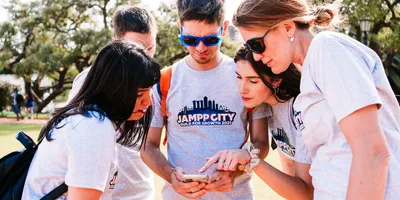
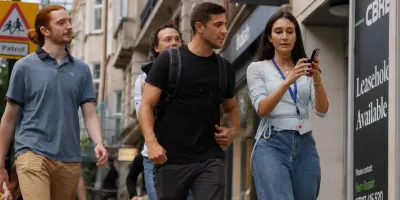
Teams of four to six head out with checkpoints, photo challenges and clues, then race back for the results. It’s the go-to for a first meetup because people talk while they walk, everyone has a role, and out-of-towners get to see the city. You can build a paper version or use an app with GPS checkpoints and a live leaderboard.
Duration: 2 hours. Group size: 8 to 750, in teams of 4 to 6.
10. Escape rooms
Book several rooms at one venue for the same time slot, put mixed teams in each and compare finish times. It’s quick and intense, which suits groups who’d rather solve a puzzle than make small talk. Check how many rooms run at once before inviting 40 people.
Duration: 60 minutes, plus travel. Group size: 2 to 6 per room.
11. A hands-on class
Cooking, pottery, mixology. Everyone learns something new together and nobody’s being judged on their day job. Book early, and don’t forget to check dietary needs.
Duration: 2 to 3 hours. Group size: usually 10 to 40, depending on the venue.
12. Team movie trailers
Each team gets an hour and a phone to make a 60-second trailer about the company, with a few rules (everyone appears, one line each, one prop from the venue). Screen them at happy hour and send them to the people who couldn’t come.
Duration: 60 to 90 minutes. Group size: 10 to 60, in teams of 4 to 6.
Two teams who’ve done it
Oomph, Inc., Providence, Rhode Island. Oomph’s distributed team met for their first Team Summit in two years, a three-day event. They opened it with Urban Explorer, a GPS scavenger hunt in small teams through Downtown Providence, a city many of them were visiting for the first time. As the team put it: “Our distributed team was in-person for the first time in a long time and chose the Urban Explorer scavenger hunt as part of our three-day event. It was AWESOME!” Read the Oomph case study.
BT, Manchester, UK. BT brought a team of 18 together for the first time in two years, with some people meeting in person for the very first time. They chose Spy School: In The Field, a GPS challenge with photo, video and trivia tasks, and kept it to a couple of hours. Read the BT case study.
How to build the teams
Left alone, people regroup with the colleagues they already know. Set the teams yourself with a few rules.
- Four to six per team. Enough skills to go around, small enough that everyone contributes.
- No more than two people from the same project or location per team.
- One manager per team, at most. Spread out the big personalities too.
- Pair new hires with veterans, so no one’s the only new face.
- Share team lists the day before. It takes the edge off walking into a room full of strangers.
What to send before the trip
A one-page email a week ahead heads off most of the nervous questions.
- The venue address, check-in window and the best way in from the airport.
- The end time, so people can book flights home with confidence.
- What to wear, especially shoes if there’s walking, and roughly how far.
- Whether anything is outdoors and the rain plan.
- Whether people need a charged phone or an app installed.
- Meal plans, plus a private way to share dietary, accessibility or other needs.
- A contact number for anyone running late.
Including people who can’t travel
Don’t leave this until after you’ve booked. Two approaches work.
- Pick a hybrid activity. Choose something remote teammates can play on a video call, on the same leaderboard as the room. It’s a lot better than watching from a laptop on a chair.
- Share the day the same evening. Send photos, videos and results, and plan the next meetup with them in mind.
That’s worth planning for anyone who’d rather not walk a long route too. On a scavenger hunt, a team can play from the venue instead.
What to avoid
- Personal-sharing icebreakers in the first five minutes.
- A schedule that runs from breakfast to midnight.
- Surprise physical challenges nobody warned people about.
- A social plan built entirely around the bar.
- Trivia that rewards ten years of company history.
- Assuming your loudest Zoom voices want to MC the room.
Have it hosted for you
If you’d rather not write a route, score 20 teams’ photos or stand on a street corner with a clipboard, our hosted in-person team building activities are built for this kind of day. A host briefs everyone, keeps teams moving and runs the results at the end. Everyone plays in teams of 4 to 6 on their phones, in our Mobile Adventures app.
For the main event, our GPS scavenger hunts start wherever suits you (your office, hotel or venue) and run for two hours, for 8 to 750 people. The Ultimate, Urban Explorer and Spy School: In The Field are the most popular picks. To stay indoors, Level Up runs for 60 or 90 minutes in a meeting room, and Invigorate is a 30 or 45-minute energizer where every challenge has to be done with a different group of people.
Outdoor events come with our weatherproof guarantee, so if rain’s forecast you can switch to Level Up at no extra cost with 24 hours’ notice, venue permitting. Self-managed bookings are excluded. Custom questions add up to eight of your own to the game, which is the easiest way to work your team’s inside jokes in.
How much does it cost?
You won’t pay for the ideas in the first two activity sections, apart from name tags, a map and some cardboard. You’ll need a venue quote for classes and escape rooms.
Our GPS scavenger hunts are $20 per person. Most of our indoor activities are $15 per person. A host is extra: $300 for a Remote Host or $750 for an Onsite Host, with one host for every 50 people. Bookings with an Onsite Host have a $2,000 minimum spend. A few shorter formats, including Invigorate, include the host and have a $300 minimum instead. Custom questions are $250. For example, a 30-person GPS scavenger hunt with a Remote Host is 30 x $20 = $600, plus $300, so $900. We’ll provide the activity and the app. Venue, food, drinks and travel aren’t included.
Are there free options?
Yes. Name tags, the map, lineups, assigned tables, walk-and-talks and a “guess who said it” quiz cost nothing but prep time. You can also write your own paper scavenger hunt. Budget an afternoon to plan and walk the route, and someone has to score it on the day.
Where does it work?
Anywhere you can get the team together: your office, a rented conference room, a hotel or out in a city. Our outdoor hunts can run in any city or on the grounds of your venue. Each player needs a smartphone or tablet with a working connection. For teammates who can’t travel, our hybrid activities run over Zoom, Microsoft Teams, Google Meet or whatever video platform you already use, with everyone on one leaderboard.
FAQs
What activities work for a remote team meeting in person for the first time?
Activities built around a shared task in small mixed teams, not ones that ask people to talk about themselves. A city scavenger hunt, an escape room, a “guess who said it” quiz from your Slack history or a build challenge all work. Open with something light like silent lineups and leave a long lunch for real conversation.
How long should a first in-person team meetup be?
One day works for teams up to about 60. Plan a 10:00 arrival, a short welcome, one working session, a long lunch, a two-hour team activity and an optional dinner. For a multi-day offsite, put the team activity on the first afternoon.
How do you make a remote team’s first meetup less awkward?
Give people a task in the first half hour, build the teams yourself so they mix, share team lists the day before and skip the personal icebreakers. Most of the awkwardness fades once people are working on something together.
What’s a good team building activity for a remote team’s first offsite?
For most teams, a two-hour scavenger hunt in small mixed teams. People talk while they walk, everyone gets a role and the group comes away with a shared story. Oomph used Urban Explorer to open its first Team Summit in two years.
How much does a hosted team activity for a remote team meetup cost?
DIY ideas are free. A hosted GPS scavenger hunt from Wildgoose is $20 per person, plus $300 for a Remote Host or $750 for an Onsite Host (with a $2,000 minimum spend). For 30 people with a Remote Host, that’s $900. Venue, food and travel are extra.
What about teammates who can’t travel?
Choose a hybrid activity so they can play over a video call on the same leaderboard, then share photos, videos and results the same day.